The body twin
Your training, on your body.
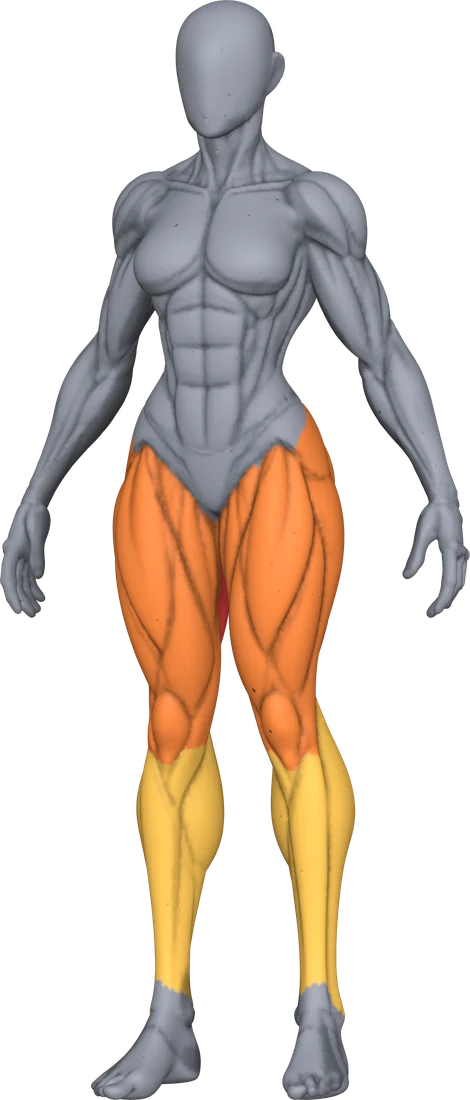
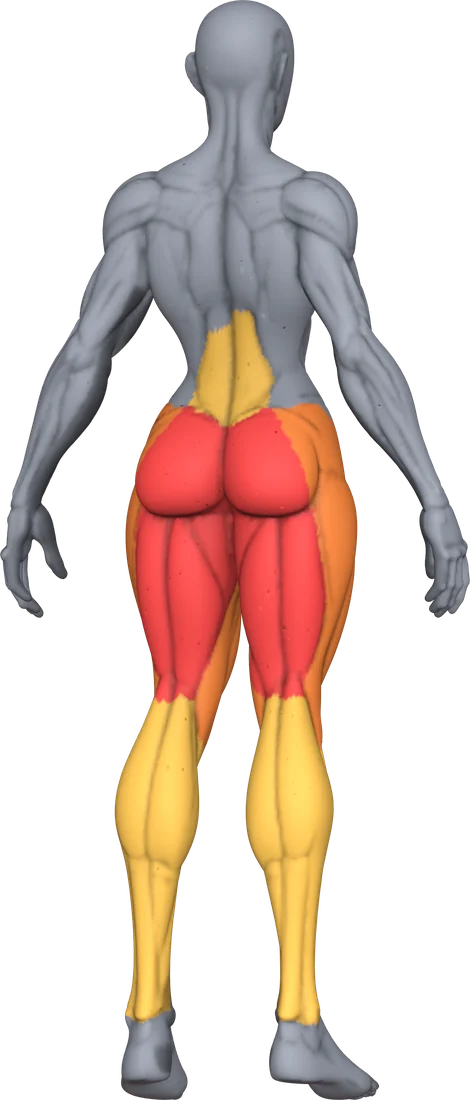
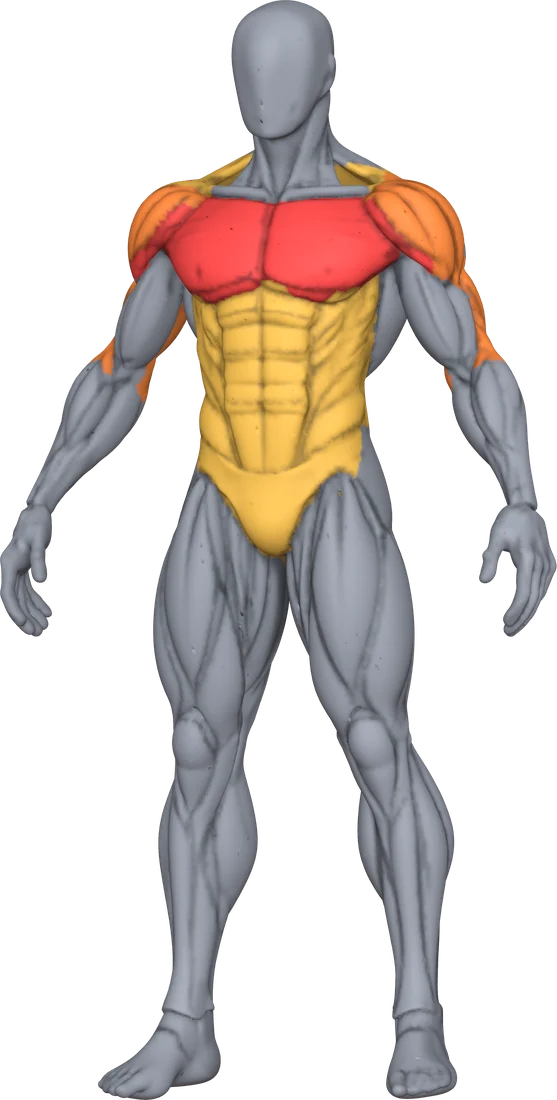
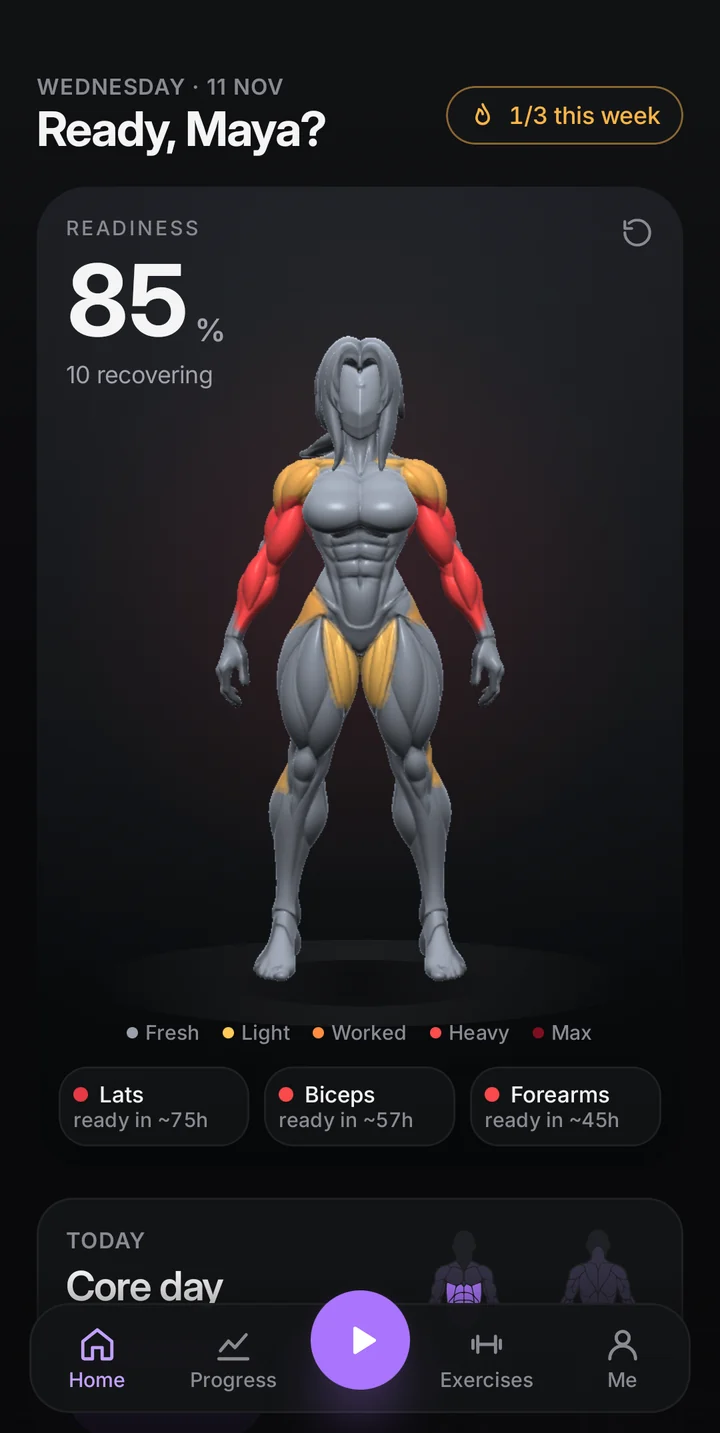
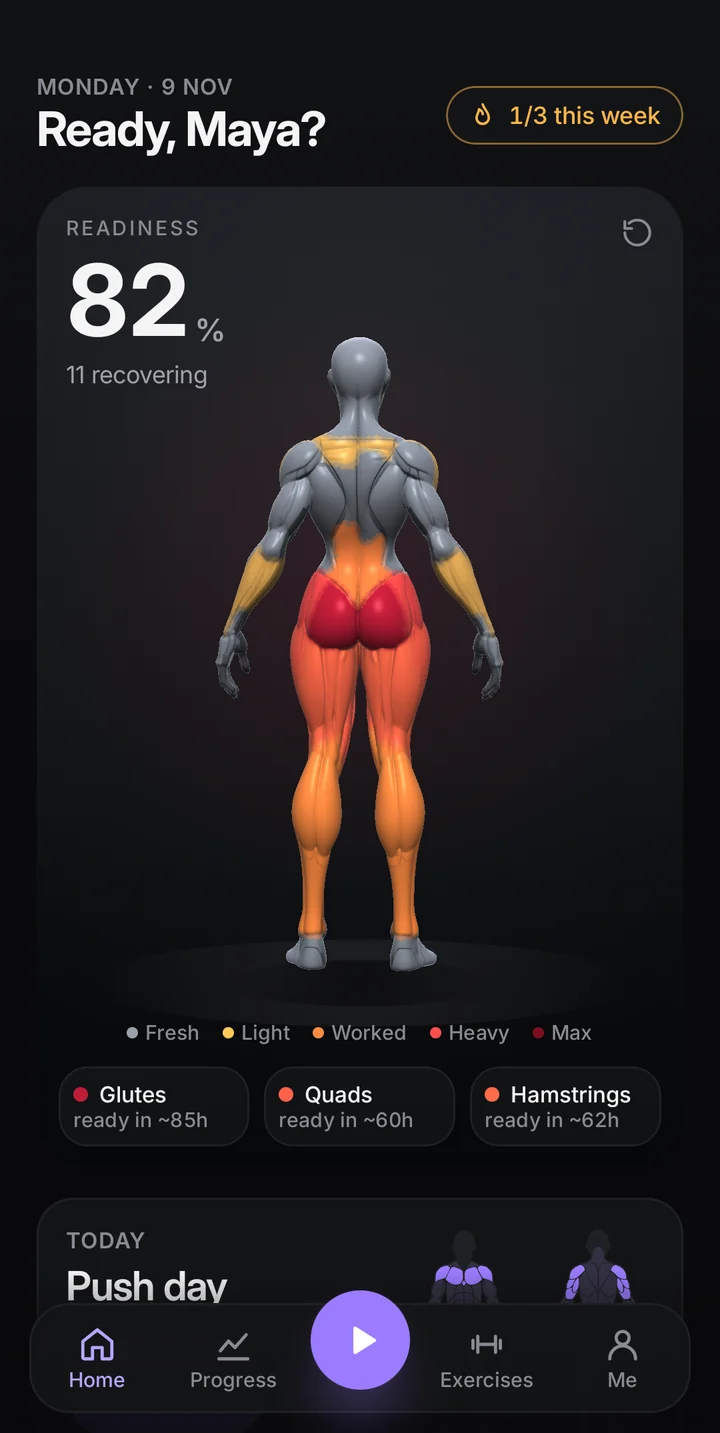
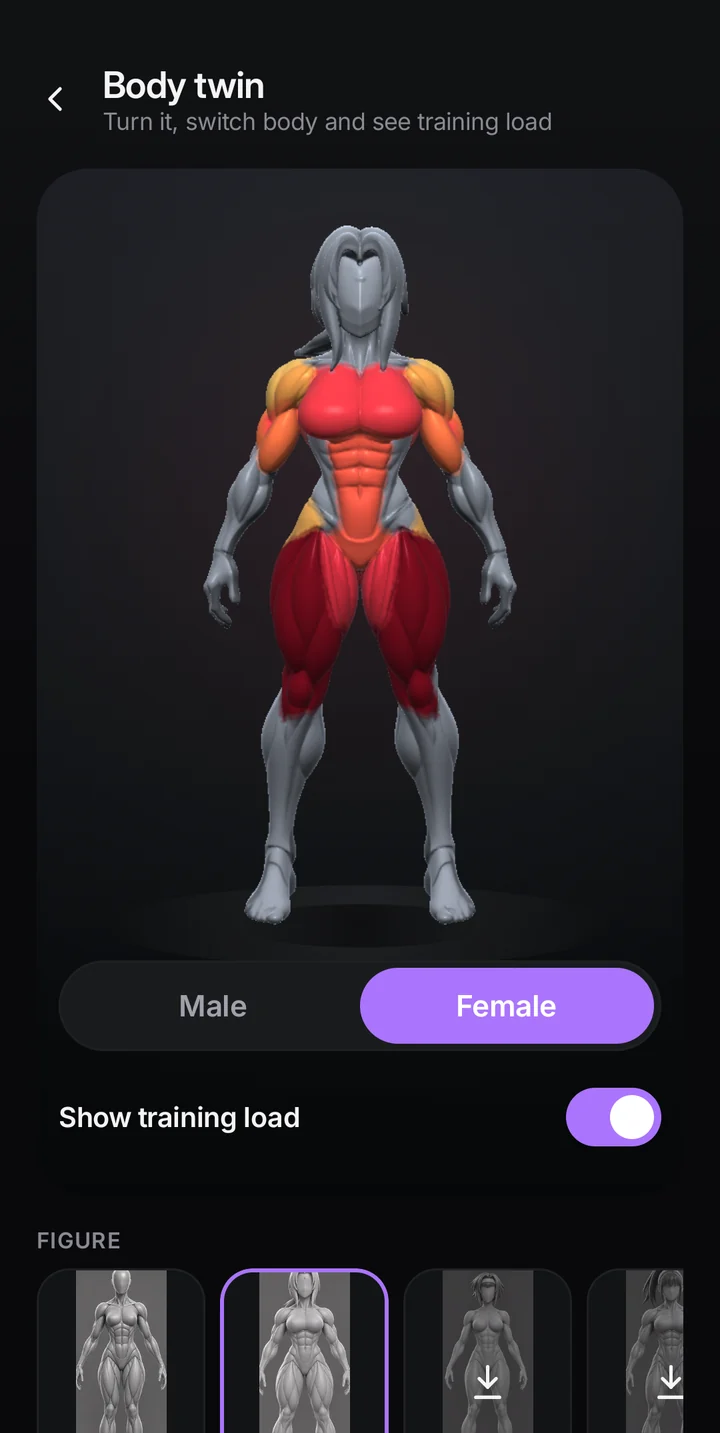
Every set you log adds load to the muscles it trains. The twin paints that load in five colours and fades it as you recover.
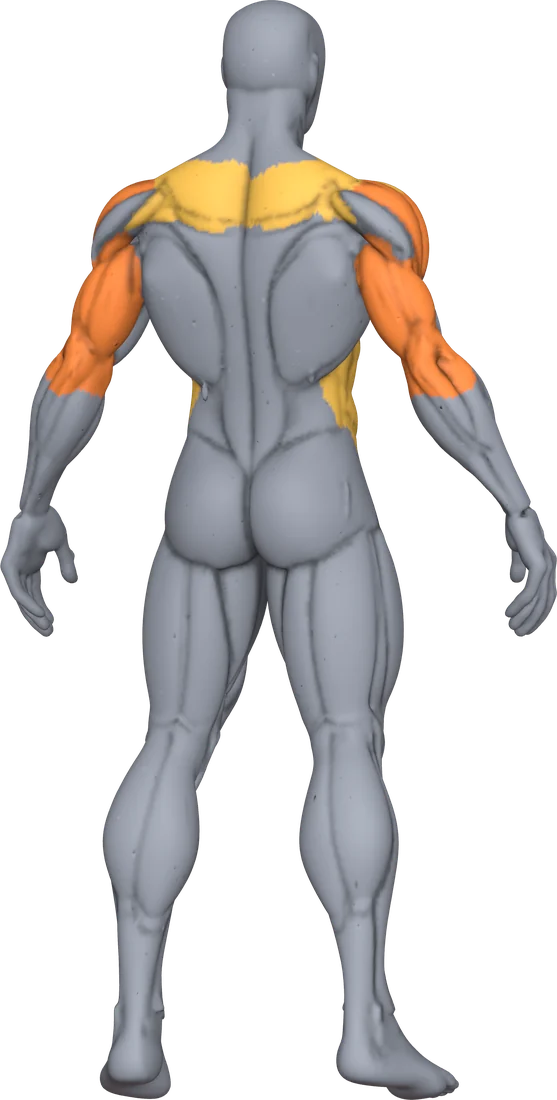
Five colours
- Fresh
Recovered. Ready to train.
- Light
A little load. Fine to train.
- Worked
Trained recently. Go easier.
- Heavy
A hard session. Give it a day.
- Max
Very high load. Let it rest.
How the load works
Every set counts
Each working set adds load. Sets to failure and high-effort sets count more; warm-ups count nothing.
Main and helper muscles
An exercise loads its main muscles fully and its helpers at half. Bench press hits the chest, and the triceps and front delts too.
Fades on its own clock
Load drops a little every hour. Each of the 20 muscles has its own pace, so a back day and an arm day recover differently.
20 muscles, three paces
Time for the load to fall by about two thirds, for a typical adult.
- Neck
- Forearms
- Abs
- Obliques
- Calves
- Traps
- Front delts
- Side delts
- Rear delts
- Biceps
- Triceps
- Abductors
- Chest
- Lats
- Mid back
- Glutes
- Quads
- Adductors
- Hamstrings
- Lower back
In the app
Questions
Is the twin a scan of my body?
No. It is a reference figure, male or female, that you pick in setup. It shows the training load on each muscle, not your shape.
Why does a muscle stay coloured for days?
Load fades gradually. Big muscles like quads, hamstrings and the lower back recover more slowly than calves or forearms, so they keep their colour longer.
Does it adapt to me?
Yes. Recovery speed is adjusted for your training experience and age, which you set during onboarding.
Will it run on my phone?
The twin is drawn on the phone itself, offline. Older or smaller phones get a lighter mode, and a flat body map if the phone cannot keep up.